7 Couples Therapy Exercises
You Can Do at Home Tonight
The couples therapy exercises that actually work aren't complicated. They're just specific. Most relationship advice tells you to “communicate better” without telling you how. That's like telling someone to “play piano better” without showing them the keys.
These are real exercises used in couples counseling — the kind a therapist might assign as homework between sessions. You don't need a therapist to try them. You need 20 minutes, a willingness to feel awkward for the first few, and a partner who's at least open to trying something different.
The 5-Minute Complaint Translation
You each take a complaint about the other and translate it into what you actually need.
Write down one thing that bothers you. Then rewrite it as a need instead of an attack. "You never help around the house" becomes "I need to feel like we're a team with the housework." "You're always on your phone" becomes "I need your full attention for at least 20 minutes after you get home." Set a timer — five minutes each. Share your translated version, not the original complaint.
The point isn't who's right. It's getting to what you actually need underneath the frustration.
The Speaker-Listener Exercise
A structured way to talk about hard topics without it spiraling into a fight.
Pick a topic that's been causing tension. Grab something physical — a pen, a coffee mug, a pillow. Whoever holds the object talks. The other person's only job is to listen and then paraphrase what they heard. Speaker talks for 2–3 minutes without interruption. Listener says: "What I hear you saying is..." Speaker confirms or corrects. Switch.
This comes from the PREP method (Prevention and Relationship Enhancement Program) used in couples counseling for decades. It sounds simple. It's surprisingly hard when the topic is something you've been arguing about for months.
The Gottman Dreams-Within-Conflict Exercise
Getting to the dream or value underneath a fight you keep having.
Pick your most recurring argument. Each person answers: What does this issue mean to me? Why is it so important? Is there a deeper dream or value behind my position? What childhood experience might be connected to how I feel about this?
The Gottman Institute found that 69% of relationship conflicts are "perpetual" — they never fully resolve because they're tied to deeper values and life dreams. The goal isn't to solve the fight. It's to understand why it matters so much to each of you.
The Appreciation Flood
Telling your partner three specific things you're grateful for — but with a twist.
You each name three things the other person did recently that you appreciated. The catch: they have to be specific and recent. Not "I appreciate how hard you work." Try: "I appreciated that you made coffee before I woke up on Thursday." Do this daily for one week, then talk about what shifted.
Couples counseling exercises like this one look small, but they're rewiring how you pay attention to each other. You start noticing the good instead of cataloging the bad.
The 10-Minute Stress-Reducing Conversation
A daily check-in where you talk about stress that has nothing to do with your relationship.
Sit down. Set a timer for 10 minutes. Take turns (5 minutes each) talking about something stressful in your life outside the relationship — work, family, health, money, a friend situation. Rules for the listener: show genuine interest, communicate understanding, take your partner's side, express affection, validate their emotions.
Don't try to fix it. Don't bring up how their stress affects you. This is purely about being their ally. The Gottman Institute calls this one of the single most effective exercises for long-term relationship health.
The Repair Attempt Check-In
Learning each other's de-escalation moves so you can recognize them mid-fight.
When you're NOT in a fight, each make a list: What do you usually do when you're trying to de-escalate or repair during a conflict? (Examples: making a joke, reaching for their hand, saying "can we start over," taking a deep breath, saying "I'm sorry") What does your partner do that you sometimes miss as a repair attempt?
A lot of fights get worse not because one person isn't trying to fix things, but because the other person doesn't recognize the attempt. Once you know what to look for, you catch it sooner.
The Unfinished Sentence Exercise
Prompts that help you say things you've been carrying but haven't found the words for.
Take turns completing these sentences. No thinking ahead while your partner talks — just listen, then take your turn. "I feel closest to you when..." / "Something I've wanted to tell you but haven't is..." / "I feel hurt when..." / "What I need most from you right now is..." / "The thing I admire most about you that I don't say enough is..." / "I'm afraid that..."
This is the kind of exercise therapists assign between sessions because it bypasses the "I don't know what to say" problem. The sentence starters do the hard part. You just finish them honestly.
If You Want More Structure
These exercises work best when you do them regularly — not as a one-time fix. Try one per week and give yourselves permission to be bad at it the first few rounds. If you want a full guided program, these are worth considering.
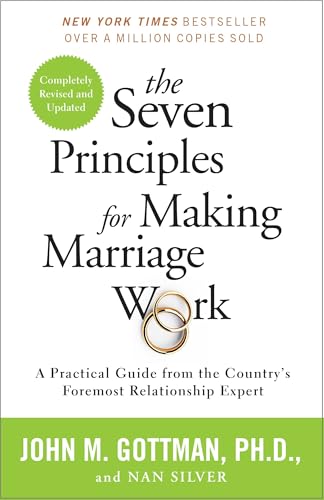
Seven Principles for Making Marriage Work — John Gottman
The full version of the Dreams-Within-Conflict exercise above comes from this book, along with guided prompts for each of Gottman's seven principles. If any of the exercises above hit home, this is the natural next step. It walks through each principle with exercises and real-couple examples.
Center for Thriving Relationships
Online courses designed specifically for couples working on their own. Their programs break down communication, conflict, and reconnection into structured steps — similar to what you'd get in therapy but at your own pace. Good for couples who want more than a book but aren't ready for weekly sessions.


Marriage Fitness — Mort Fertel
A step-by-step program for couples who want to repair their marriage without traditional counseling. The Tele-Boot Camp walks you through daily assignments over several weeks. Especially popular with couples where one partner isn't sold on therapy — it frames the work as daily action rather than weekly sessions.
BetterHelp
If you try these exercises and keep hitting the same wall — the same argument, the same shutdown, the same pattern that won't budge — that's not failure. That's a sign having a trained person in the room would help. BetterHelp matches you with a licensed couples therapist online, usually within a day or two. Sometimes the best exercise is admitting you need a guide.