You won't be asked to bare your soul right away
The first session is mostly information-gathering. Think of it like a doctor's appointment — they're taking a history before prescribing anything.
You've been thinking about marriage counseling. Maybe you've mentioned it to your partner. Maybe you haven't yet. But the question rattling around your head isn't really should we go — it's what happens when we get there?
Here's a straight answer: marriage counseling is a structured conversation with a trained third party who helps you and your partner talk about the stuff you can't seem to talk about on your own. No lying on a couch. No one asking about your childhood for an hour. It's more practical than most people expect.
This is the one that makes people the most nervous, and it's also the most predictable. Your therapist is going to ask questions. A lot of them. They want to understand your relationship history — how you met, when things started feeling hard, what you've already tried.
The first session is mostly information-gathering. Think of it like a doctor's appointment — they're taking a history before prescribing anything.
Their job isn't to decide who's right. They're more like a referee with a playbook — they're watching the patterns, not keeping score.
Some therapists schedule one solo session with each partner before the first couples session. This gives everyone a chance to share things they might hold back.
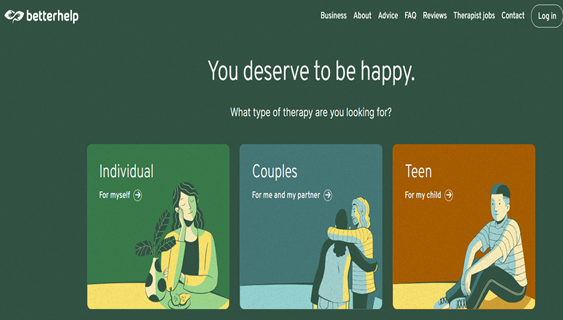
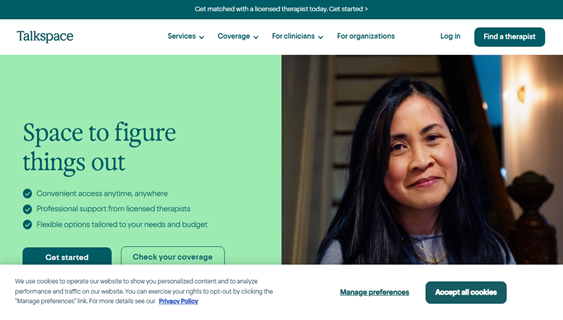
Online platforms match you with a licensed therapist within a day or two. You fill out a questionnaire, get matched, and start with a video session from home — which takes a lot of the “walking into a stranger's office” anxiety off the table.
The largest online therapy platform. Over 30,000 licensed therapists, flexible session formats (video, phone, or messaging), and the ability to switch therapists for free. Most couples get matched within 48 hours.
Similar to BetterHelp with one major advantage: Talkspace accepts insurance in many states. If your plan covers it, sessions can drop to a regular copay. Video, audio, and messaging options available.
Once your therapist has the background, the real work starts. These early sessions are about identifying the cycles you're stuck in. Every couple has patterns — one person shuts down, the other pushes harder. One brings up a problem, the other gets defensive.
Your therapist's job is to slow things down and point out what's happening beneath the surface. They'll interrupt — politely — and ask things like:
"What were you feeling right before you said that?"
"When they go quiet, what does that mean to you?"
"What would you need to hear from them right now?"
It can feel awkward. You're learning a new way of talking, and it doesn't feel natural at first. That's normal. Most couples say sessions 2 through 4 are the hardest because you're seeing your patterns clearly, sometimes for the first time.
This is where it starts to click. By now you've identified your biggest cycles. You know what triggers them. And your therapist has given you specific tools to interrupt those cycles when they start.
You'll try new ways of communicating — in the session, with your therapist coaching you through it. When it goes sideways, the therapist walks you back and helps you try again.
Not worksheets-on-the-fridge homework. Real assignments: have one 10-minute conversation this week using the approach you practiced. Notice when you're about to fall into the old pattern and try something different instead.
Most couples who stick with it say the shift happens somewhere in this window. The fights don't disappear, but they get shorter. You start catching yourself mid-pattern.
There's no fixed endpoint. Some couples come for 8 sessions and feel solid. Others go for 6 months. Some do a burst of sessions, take a break, and come back for a tune-up later.
When you do end, it's usually gradual. Weekly sessions become biweekly, then monthly, then you're done. You'll leave with a set of tools and a better understanding of how your relationship works under pressure.
Even a rough one. "I want us to stop having the same argument every Sunday" is more useful than "fix our marriage."
Both of you need to commit to being straight with the therapist, even when it's uncomfortable. Counseling can't work on the version of your relationship you wish you had.
You won't walk out fixed. You might not even walk out feeling better. That first session is setup — the progress comes later.
In-person works great, but online therapy has gotten genuinely good. Platforms like BetterHelp and Talkspace let you do video sessions from home, which removes one of the biggest barriers — actually getting two busy adults to the same office at the same time.
A marriage counselor isn't going to tell you to leave your partner or tell your partner to shape up. They help you figure out what's happening and give you better ways to handle it.
This isn't talk therapy where you lie on a couch and free-associate. Couples counseling is active. Your therapist will interrupt, redirect, ask pointed questions, and sometimes call out behavior as it's happening.
If you ever feel like your therapist is consistently siding with your partner, bring it up directly. A good therapist will appreciate the honesty and adjust. If they don't, find a new one.
Marriage counseling works best when both people show up — physically and emotionally. It's not comfortable, especially at first. You'll hear things about yourself you might not like. You'll have to own your part in the patterns.
But for most couples, the process itself is less scary than the not-knowing. Now that you know what actually happens in that room, the only question left is whether you're ready to try.
Couples Reset is a $37 toolkit with ready-made scripts for tough conversations — not therapy, but a practical set of words for when you don't know what to say. Learn more at couplesreset.net.